

Package Exports
- @power-seo/search-console
Readme
@power-seo/search-console
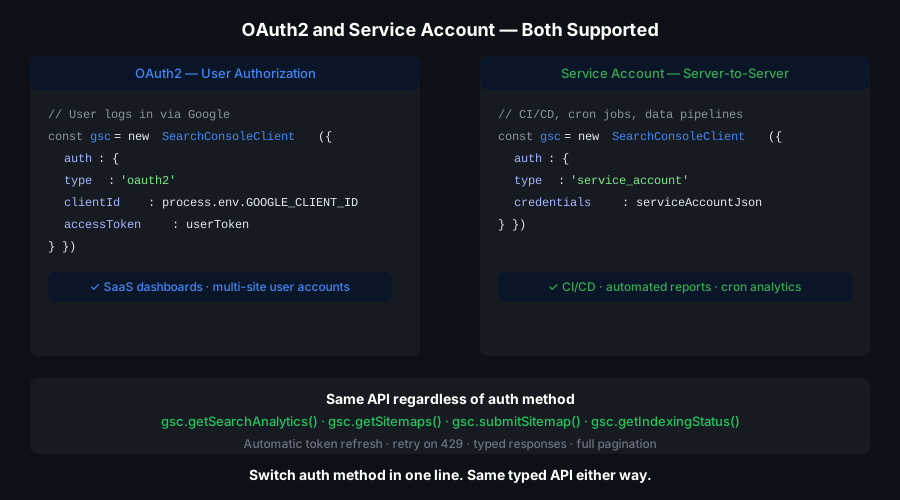
Typed Google Search Console API client for TypeScript — OAuth2 and service account auth, auto-paginated search analytics, URL inspection, and sitemap management with zero boilerplate.





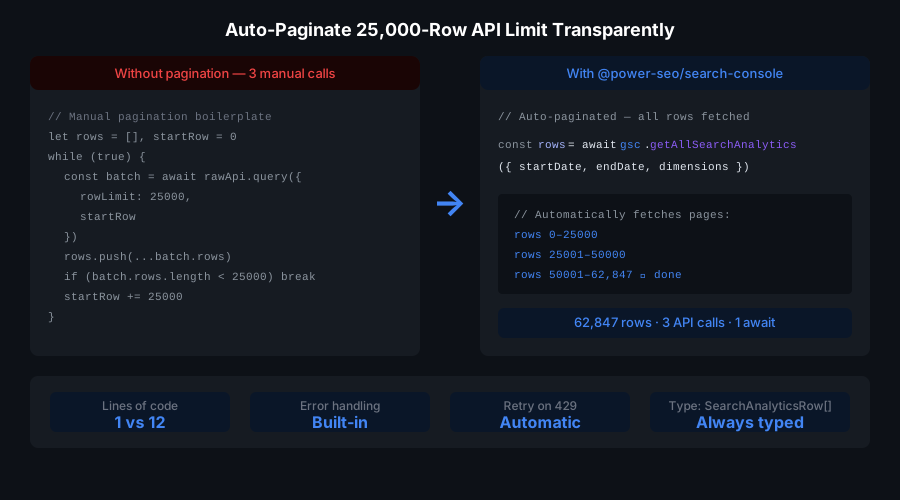
@power-seo/search-console is a production-ready Google Search Console API client for TypeScript. Provide OAuth2 credentials or a service account key — get back fully typed search analytics rows, URL inspection verdicts, and sitemap management operations. The token manager handles refresh cycles and JWT signing automatically. querySearchAnalyticsAll() transparently pages through the 25,000-row GSC API limit, merging all results into a single array. Use it in Next.js API routes, Remix loaders, Node.js scripts, and CI/CD pipelines. All operations are server-side only — service account credentials must never be exposed to the browser.
Zero runtime dependencies — pure TypeScript with native
fetchandcrypto; no googleapis package required.
Why @power-seo/search-console?
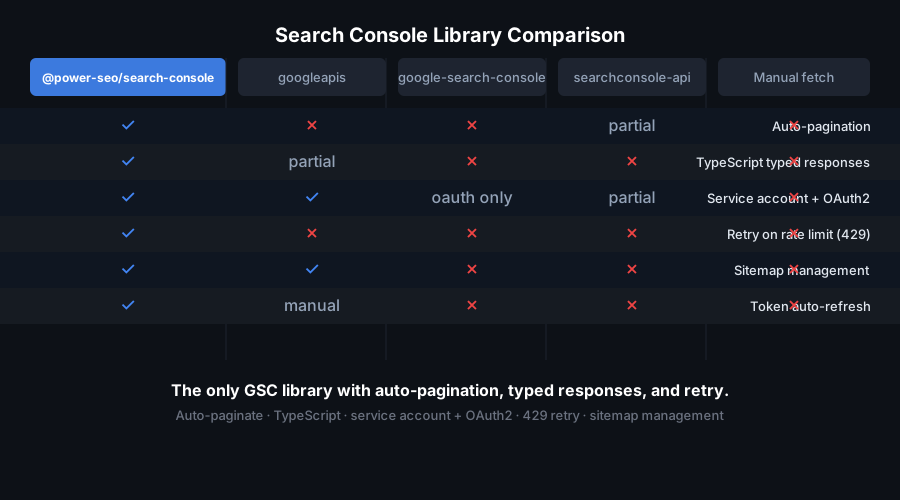
| Without | With | |
|---|---|---|
| OAuth2 token refresh | ❌ 50+ lines of boilerplate per project | ✅ Auto-refresh via createTokenManager() |
| GSC data pagination | ❌ Manual rowOffset loops and array merging | ✅ querySearchAnalyticsAll() — one call, all rows |
| URL inspection | ❌ Manual GSC UI check only | ✅ Programmatic inspectUrl() in CI pipelines |
| Service accounts | ❌ Complex JWT signing setup | ✅ createTokenManager({ type: 'service-account' }) |
| Type safety | ❌ Raw API responses typed as any |
✅ Fully typed request and response shapes |
| Sitemap management | ❌ Manual GSC UI operations | ✅ submitSitemap(), listSitemaps(), deleteSitemap() |
| Framework support | ❌ Tied to googleapis setup | ✅ Works in Next.js, Remix, Node.js, CI/CD |

Features
- OAuth2 authentication —
createTokenManager({ type: 'oauth' })handles token refresh automatically - Service account JWT authentication —
createTokenManager({ type: 'service-account' })signs JWTs for server-to-server access without user interaction - Low-level auth primitives —
exchangeRefreshToken()andgetServiceAccountToken()for custom auth flows - Typed GSC client —
createGSCClient(config)returns aGSCClientscoped to a specific verified site URL - Search analytics —
querySearchAnalytics()supports all 6 dimensions:query,page,country,device,date,searchAppearance - All search types —
web,image,video, andnewssearch types - Auto-paginated full fetch —
querySearchAnalyticsAll()merges all pages into oneSearchAnalyticsRow[]array - URL inspection —
inspectUrl()returns verdict, indexing state, last crawl time, mobile usability, and rich result status - Direct URL inspection —
inspectUrlDirect()for the direct URL inspection API endpoint - Sitemap listing —
listSitemaps()with status, last download time, and error counts - Sitemap submission and deletion —
submitSitemap()anddeleteSitemap() - Typed error handling —
GSCApiErrorclass withstatus,code, andmessage - Full TypeScript support — complete type definitions for all request and response shapes
Comparison
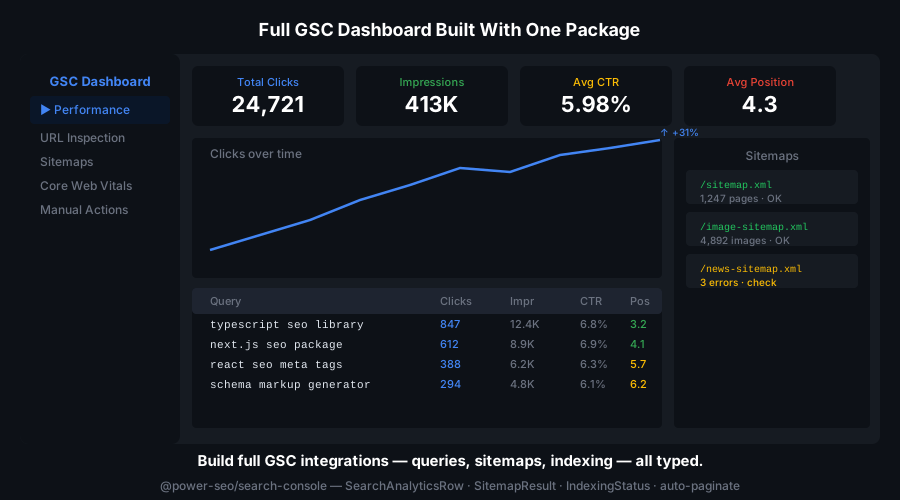
| Feature | google-auth-library | googleapis | custom fetch | @power-seo/search-console |
|---|---|---|---|---|
| OAuth2 token auto-refresh | ✅ | ✅ | ❌ | ✅ |
| Service account JWT signing | ✅ | ✅ | ❌ | ✅ |
| Auto-paginated analytics fetch | ❌ | ❌ | ❌ | ✅ |
| Typed GSC-specific response shapes | ❌ | ⚠️ | ❌ | ✅ |
| URL inspection support | ❌ | ⚠️ | ❌ | ✅ |
| Sitemap management | ❌ | ⚠️ | ❌ | ✅ |
| Zero runtime dependencies | ❌ | ❌ | ✅ | ✅ |
| TypeScript-first | ❌ | ⚠️ | ❌ | ✅ |
Installation
npm install @power-seo/search-consoleyarn add @power-seo/search-consolepnpm add @power-seo/search-consoleQuick Start
import {
  createTokenManager,
  createGSCClient,
  querySearchAnalyticsAll,
} from '@power-seo/search-console';

// 1. Create a token manager (OAuth2)
import { exchangeRefreshToken } from '@power-seo/search-console';

const tokenManager = createTokenManager(() =>
  exchangeRefreshToken({
    clientId: process.env.GSC_CLIENT_ID!,
    clientSecret: process.env.GSC_CLIENT_SECRET!,
    refreshToken: process.env.GSC_REFRESH_TOKEN!,
  }),
);

// 2. Create a client scoped to your site
const client = createGSCClient({
  siteUrl: 'https://example.com',
  auth: tokenManager,
});

// 3. Fetch all search analytics data (auto-paginated)
const rows = await querySearchAnalyticsAll(client, {
  startDate: '2026-01-01',
  endDate: '2026-01-31',
  dimensions: ['query', 'page'],
});

rows.forEach(({ keys, clicks, impressions, ctr, position }) => {
  console.log(`Query: "${keys[0]}", Page: ${keys[1]}`);
  console.log(`  ${clicks} clicks, ${impressions} impressions, pos ${position.toFixed(1)}`);
});
Usage
OAuth2 Authentication
import { createTokenManager, exchangeRefreshToken } from '@power-seo/search-console';

const tokenManager = createTokenManager(() =>
  exchangeRefreshToken({
    clientId: process.env.GSC_CLIENT_ID!,
    clientSecret: process.env.GSC_CLIENT_SECRET!,
    refreshToken: process.env.GSC_REFRESH_TOKEN!,
  }),
);

const accessToken = await tokenManager.getToken();
Service Account Authentication
import { createTokenManager, getServiceAccountToken } from '@power-seo/search-console';
import { subtle } from 'node:crypto';

// Parse service account JSON and create signing function
const serviceAccount = JSON.parse(process.env.GSC_SERVICE_ACCOUNT_JSON!);

async function signJwt(payload: Record<string, unknown>): Promise<string> {
  // Implement JWT signing using node:crypto or your preferred library
  // Returns signed JWT assertion string
}

const tokenManager = createTokenManager(() =>
  getServiceAccountToken({
    clientEmail: serviceAccount.client_email,
    privateKeyId: serviceAccount.private_key_id,
    signJwt,
  }),
);
Search Analytics Query
import { createGSCClient, querySearchAnalytics } from '@power-seo/search-console';

const client = createGSCClient({ siteUrl: 'https://example.com', tokenManager });

const response = await querySearchAnalytics(client, {
  startDate: '2026-01-01',
  endDate: '2026-01-31',
  dimensions: ['query', 'country'],
  searchType: 'web',
  rowLimit: 5000,
});

// response.rows → SearchAnalyticsRow[]
Auto-Paginated Full Fetch
import { querySearchAnalyticsAll } from '@power-seo/search-console';

// Fetches all rows automatically — handles the 25,000-row API limit
const allRows = await querySearchAnalyticsAll(client, {
  startDate: '2026-01-01',
  endDate: '2026-01-31',
  dimensions: ['query'],
});

console.log(`Total rows: ${allRows.length}`);
URL Inspection
import { inspectUrl } from '@power-seo/search-console';

const result = await inspectUrl(client, 'https://example.com/blog/my-post');

console.log(result.verdict); // 'PASS' | 'FAIL' | 'NEUTRAL'
console.log(result.indexingState); // 'INDEXING_ALLOWED' | ...
console.log(result.lastCrawlTime); // ISO timestamp
console.log(result.mobileUsabilityResult.verdict); // 'PASS' | 'FAIL'
Sitemap Management
import { listSitemaps, submitSitemap, deleteSitemap } from '@power-seo/search-console';

// List all submitted sitemaps
const sitemaps = await listSitemaps(client);
// sitemaps.sitemap → SitemapEntry[]

// Submit a new sitemap
await submitSitemap(client, 'https://example.com/sitemap.xml');

// Delete an old sitemap
await deleteSitemap(client, 'https://example.com/old-sitemap.xml');
CI/CD Keyword Position Check
import {
  createTokenManager,
  createGSCClient,
  querySearchAnalyticsAll,
  getServiceAccountToken,
} from '@power-seo/search-console';
import { subtle } from 'node:crypto';

// Parse service account JSON from environment
const serviceAccount = JSON.parse(process.env.GSC_SERVICE_ACCOUNT_JSON!);

async function signJwt(payload: Record<string, unknown>): Promise<string> {
  // Sign JWT assertion using node:crypto
  // Implementation depends on your preferred JWT signing library
  throw new Error('Implement JWT signing');
}

const tokenManager = createTokenManager(() =>
  getServiceAccountToken({
    clientEmail: serviceAccount.client_email,
    privateKeyId: serviceAccount.private_key_id,
    signJwt,
  }),
);

const client = createGSCClient({ siteUrl: 'sc-domain:example.com', tokenManager });

const rows = await querySearchAnalyticsAll(client, {
  startDate: '2026-01-24',
  endDate: '2026-01-31',
  dimensions: ['query', 'page'],
});

const dropped = rows.filter((r) => r.position > 20 && r.impressions > 100);
if (dropped.length > 0) {
  console.error('Pages dropped below position 20:');
  dropped.forEach((r) => console.error(' -', r.keys[1], `pos ${r.position.toFixed(1)}`));
  process.exit(1);
}
API Reference
createTokenManager(fetchToken)
| Parameter | Type | Description |
|---|---|---|
fetchToken |
() => Promise<TokenResult> |
Function that returns token result |
Returns TokenManager: { getToken(): Promise<string>; invalidate(): void }. Token caching and refresh is handled automatically.
createGSCClient(config)
| Parameter | Type | Description |
|---|---|---|
config.siteUrl |
string |
Verified GSC property URL (sc-domain: prefix for domain properties) |
config.auth |
TokenManager |
Token manager from createTokenManager() |
config.rateLimitPerMinute |
number |
Rate limit (default: 1200) |
config.maxRetries |
number |
Max retries for failed requests (default: 3) |
config.baseUrl |
string |
Base URL for GSC API (default: official Google endpoint) |
Returns GSCClient.
querySearchAnalytics(client, request)
| Parameter | Type | Default | Description |
|---|---|---|---|
request.startDate |
string |
required | YYYY-MM-DD |
request.endDate |
string |
required | YYYY-MM-DD |
request.dimensions |
Dimension[] |
[] |
'query', 'page', 'country', 'device', 'date', 'searchAppearance' |
request.searchType |
SearchType |
'web' |
'web', 'image', 'video', 'news', 'discover', 'googleNews' |
request.rowLimit |
number |
1000 |
Rows per request (max 25,000) |
request.startRow |
number |
0 |
Row offset for pagination |
request.dimensionFilterGroups |
object[] |
[] |
Filter groups to narrow results |
request.aggregationType |
string |
'auto' |
Aggregation method: 'auto', 'byPage', 'byProperty' |
request.dataState |
string |
'all' |
Include all or final data: 'all', 'final' |
querySearchAnalyticsAll(client, request)
Same parameters as querySearchAnalytics() but rowLimit and startRow are managed automatically. Returns Promise<SearchAnalyticsRow[]>.
inspectUrl(client, url) / inspectUrlDirect(client, url)
Returns Promise<InspectionResult>: { verdict, indexingState, lastCrawlTime, mobileUsabilityResult, richResultsResult, ... }.
listSitemaps(client) / submitSitemap(client, url) / deleteSitemap(client, url)
listSitemaps() returns Promise<SitemapListResponse>. submitSitemap() and deleteSitemap() return Promise<void>.
Types
| Type | Description |
|---|---|
OAuthCredentials |
{ clientId, clientSecret, refreshToken } |
ServiceAccountCredentials |
{ clientEmail, privateKey, scopes } |
TokenResult |
{ accessToken: string, expiresAt: number } |
TokenManager |
{ getToken(): Promise<string>, invalidate(): void } |
GSCClientConfig |
{ siteUrl: string, tokenManager: TokenManager } |
GSCClient |
Scoped API client instance |
SearchType |
'web' | 'image' | 'video' | 'news' |
Dimension |
'query' | 'page' | 'country' | 'device' | 'date' | 'searchAppearance' |
SearchAnalyticsRequest |
Request shape for querySearchAnalytics() |
SearchAnalyticsRow |
{ keys: string[], clicks, impressions, ctr, position } |
SearchAnalyticsResponse |
API response wrapper with rows: SearchAnalyticsRow[] |
InspectionResult |
URL inspection verdict, indexing state, and details |
SitemapEntry |
Single sitemap with status, lastDownloaded, errors |
SitemapListResponse |
{ sitemap: SitemapEntry[] } |
GSCApiError |
Error class with status, code, and message |
Use Cases
- Automated keyword ranking reports — fetch all queries weekly and diff against the previous week
- Indexing health monitoring —
inspectUrl()after deployments to verify new pages are indexed - Content gap analysis — merge GSC data with
@power-seo/analyticsto find high-impression, low-click pages - Sitemap automation — submit new sitemaps programmatically after content migrations
- CI/CD SEO checks — fail pipelines when key pages drop below a position threshold
- Multi-site SaaS dashboards — aggregate GSC data across multiple client properties with one
GSCClientper site - Image and news search analytics — query
imageandnewssearch types separately - Country and device breakdowns — segment click data by country or device for regional SEO analysis
Architecture Overview
- Pure TypeScript — no compiled binary, no native modules
- Server-side only — requires
cryptofor JWT signing; not edge or browser compatible - Zero runtime dependencies — no googleapis package; uses native
fetchandcrypto - Auto-pagination —
querySearchAnalyticsAll()managesrowOffsetand array merging transparently - Token caching — access tokens are cached and reused until 5 minutes before expiry
- Scoped clients — each
GSCClientis scoped to one verified GSC property viasiteUrl - Typed errors —
GSCApiErrorcarries HTTP status, error code, and message for reliable error handling - Dual ESM + CJS — ships both formats via tsup for any bundler or
require()usage
Supply Chain Security
- No install scripts (
postinstall,preinstall) - No runtime network access outside of GSC API calls
- No
evalor dynamic code execution - CI-signed builds — all releases published via verified
github.com/CyberCraftBD/power-seoworkflow - Safe for Node.js 18+ server environments
The @power-seo Ecosystem
All 17 packages are independently installable — use only what you need.
| Package | Install | Description |
|---|---|---|
@power-seo/core |
npm i @power-seo/core |
Framework-agnostic utilities, types, validators, and constants |
@power-seo/react |
npm i @power-seo/react |
React SEO components — meta, Open Graph, Twitter Card, breadcrumbs |
@power-seo/meta |
npm i @power-seo/meta |
SSR meta helpers for Next.js App Router, Remix v2, and generic SSR |
@power-seo/schema |
npm i @power-seo/schema |
Type-safe JSON-LD structured data — 23 builders + 21 React components |
@power-seo/content-analysis |
npm i @power-seo/content-analysis |
Yoast-style SEO content scoring engine with React components |
@power-seo/readability |
npm i @power-seo/readability |
Readability scoring — Flesch-Kincaid, Gunning Fog, Coleman-Liau, ARI |
@power-seo/preview |
npm i @power-seo/preview |
SERP, Open Graph, and Twitter/X Card preview generators |
@power-seo/sitemap |
npm i @power-seo/sitemap |
XML sitemap generation, streaming, index splitting, and validation |
@power-seo/redirects |
npm i @power-seo/redirects |
Redirect engine with Next.js, Remix, and Express adapters |
@power-seo/links |
npm i @power-seo/links |
Link graph analysis — orphan detection, suggestions, equity scoring |
@power-seo/audit |
npm i @power-seo/audit |
Full SEO audit engine — meta, content, structure, performance rules |
@power-seo/images |
npm i @power-seo/images |
Image SEO — alt text, lazy loading, format analysis, image sitemaps |
@power-seo/ai |
npm i @power-seo/ai |
LLM-agnostic AI prompt templates and parsers for SEO tasks |
@power-seo/analytics |
npm i @power-seo/analytics |
Merge GSC + audit data, trend analysis, ranking insights, dashboard |
@power-seo/search-console |
npm i @power-seo/search-console |
Google Search Console API — OAuth2, service account, URL inspection |
@power-seo/integrations |
npm i @power-seo/integrations |
Semrush and Ahrefs API clients with rate limiting and pagination |
@power-seo/tracking |
npm i @power-seo/tracking |
GA4, Clarity, PostHog, Plausible, Fathom — scripts + consent management |
About CyberCraft Bangladesh
CyberCraft Bangladesh is a Bangladesh-based enterprise-grade software development and Full Stack SEO service provider company specializing in ERP system development, AI-powered SaaS and business applications, full-stack SEO services, custom website development, and scalable eCommerce platforms. We design and develop intelligent, automation-driven SaaS and enterprise solutions that help startups, SMEs, NGOs, educational institutes, and large organizations streamline operations, enhance digital visibility, and accelerate growth through modern cloud-native technologies.




© 2026 CyberCraft Bangladesh · Released under the MIT License