
Package Exports
- json-ref-lite
This package does not declare an exports field, so the exports above have been automatically detected and optimized by JSPM instead. If any package subpath is missing, it is recommended to post an issue to the original package (json-ref-lite) to support the "exports" field. If that is not possible, create a JSPM override to customize the exports field for this package.
Readme
Extremely light weight way to resolve jsonschema '$ref' references & inheritance: create circular/graphs, fractals from json (browser/coffeescript/javascript).
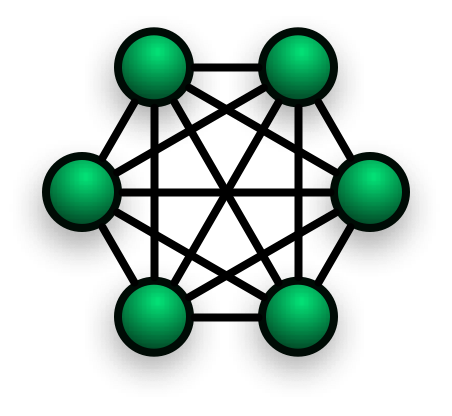
Stop processing json tree-structures, think json references and extentions.
Usage
nodejs:
jref = require('json-ref-lite')or in the browser:
<script type="text/javascript" src="json-ref-lite.min.js"></script>
jref = require('json-ref-lite');
For example here's how to do a multidirected graph:
  json = {
    "a": { "$ref": [{"$ref":"#/b"}]           },
    "b": { "$ref": [{"$ref": [{"$ref":"#/a"}] }
  }
  console.dir(jref.resolve(json));
outputs:
  { a: { '$ref': [ { '$ref': [ [Circular] ] } ] },
    b: { '$ref': [ { '$ref': [ [Circular] ] } ] } }
NOTE #1: for flowprogramming with json-ref-lite see jsongraph NOTE #2: for converting a restful service to server/client graph see ohmygraph
Resolve Jsonschema v1/2/3 references
json-ref-lite resolves newer, older jsonschema reference notations, as well as simple dotstyle:
json = {
  foo: {
    id: 'foobar',
    value: 'bar'
  },
  old: { '$ref': 'foobar'      }
  new: { '$ref': '#/foo/id'    }
  dotstyle: { '$ref': '#foo.id' }
};

console.dir(jref.resolve(json));
Outputs:
{
  foo: { id: 'foobar', value: 'bar' },
  old: { value: 'bar' },
  new: 'foobar',
  dotstyle: 'foobar',
}
Why?
Because dont-repeat-yourself (DRY)! It is extremely useful to use '$ref' keys in jsonschema graphs. Instead of writing manual REST-api gluecode, you can build a restgraph client & server.
Rule of thumb
When referencing to keys, always use underscores. Not doing this will not resolve references correctly.
Features
| Feature | Notation |
|---|---|
| resolving (old) jsonschema references to 'id'-fields | "$ref": "foobar" |
| resolving (new) jsonschema internal jsonpointers | "$ref": "#/foo/value" |
| resolving positional jsonpointers | "$ref": "#/foo/bar[2]" |
| resolving grouped jsonpointers | "$ref": [{"$ref": "#/foo"},{"$ref": "#/bar}] for building jsongraphs |
| evaluating positional jsonpointer function | "$ref": "#/foo/bar()" |
| resolving local files | "$ref": "/some/path/test.json" |
| resolving remote json(schema) files | "$ref": "http://foo.com/person.json" |
| resolving remote jsonpointers | "$ref": "http://foo.com/person.json#/address/street" |
| evaluating jsonpointer notation in string | foo_{#/a/graph/value} |
| evaluating dot-notation in string | foo_{a.graph.value} |
Developer tools:
| Feature | Howto |
|---|---|
| console.log debug output | jref.debug = true |
| redefine ref token | jref.reftoken = '@ref' |
| redefine extend token | jref.extendtoken = '@extend' |
| redefine jsonpointer starttoken | jref.pathtoken = '#' |
NOTE: re-defining tokens is useful to prevent resolving only certain references. A possible rule of thumb could be to have '$ref' references for serverside, and '@ref' references for clientside when resolving the same jsondata.
Example: id fields
json = {
  foo: {
    id: 'foobar',
    value: 'bar'
  },
  example: {
    '$ref': 'foobar'
  }
};
outputs:
{
  foo: { id: 'foobar', value: 'bar' },
  example: { value: 'bar' }
}
Example: jsonpointers
{
  foo: {
    value: 'bar',
    foo: 'flop'
  },
  example: {
    ids: {
      "foo":"bar",
      '$ref': '#/foo/foo'
    }
  }
}
outputs:
{
  foo: {
    value: 'bar',
    foo: 'flop'
  },
  example: {
    foo:"bar",
    ids: 'flop'
  }
}
NOTE: escaping slashes in keys is supported.
"#/model/foo['\\/bar']/flop"will try to referencemodel.foo['/bar'].flopfrom itself
Example: remote schemas
{
  foo: {
    "$ref": "http://json-schema.org/address"
  }
  bar: {
    "$ref": "http://json-schema.org/address#/street/number"
  }
}
outputs: replaces value of foo with jsonresult from given url, also supports jsonpointers to remote source
NOTE: please install like so for remote support: 'npm install json-ref-lite sync-request'
Example: local files
{
  foo: {
    "$ref": "./test.json"
  }
}
outputs: replaces value of foo with contents of file test.json (use './' for current directory).
Example: array references
{
  "bar": ["one","two"],
  "foo": { "$ref": "#/bar[1]" }
}
outputs:
{
  "bar": ["one","two"],
  "foo": "two"
}
Example: evaluating functions
Ofcoarse functions fall outside the json scope, but they can be executed after binding them to the json.
json = {
  "bar": { "$ref": "#/foo()" }
}

json.foo = function(){ return "Hello World"; }
outputs:
{
  "bar": "Hello World"
}
Example: Graphs / Circular structures
Json-ref allows you to build circular/flow structures.
{
  "a": { "$ref": [{"$ref":"#/b"}] },
  "b": { "$ref": [{"$ref":"#/a"}] },
  "c": { "$ref": [{"$ref":"#/a"}] }
}
This resembles the following graph: b<->a<-c
See superminimalistic dataflow programming example here JS / CS
HINT: But hey, since you're reading this, why not use jsongraph instead?
Example: evaluating data into graph
Process graph-values into strings:
data =
  boss: {name:"John"}
  employee: {name:"Matt"}

template = jref.resolve
  boss:
    name: "{boss.name}"
  employee:
    name: "{#/employee/name}"
  names: [{"$ref":"#/boss/name"},{"$ref":"#/employee/name"}]

graph = jref.evaluate template, data # !!! (k,v) -> return v

console.log JSON.stringify graph, null, 2
Note #1: you can override the evaluator with your own by adding a function as third argument. See the '!!' comment Note #2: both jsonpointer notation
foo_{#/a/graph/value}as well as dot-notation is allowedfoo_{a.graph.value}
Example: restgraph using jsonschema
CRUD operations in server/client without dealing with the underlying rest interface? See the ohmygraph module.
Philosophy
- This is a zero-dependency module.
- isomorphic is cool
- pistachio icecream is nice