
Package Exports
- timeengine-react
This package does not declare an exports field, so the exports above have been automatically detected and optimized by JSPM instead. If any package subpath is missing, it is recommended to post an issue to the original package (timeengine-react) to support the "exports" field. If that is not possible, create a JSPM override to customize the exports field for this package.
Readme
timeengine-react

TimeEngine ( timeengine ) Extension for Stateless React programming without props and state
https://www.npmjs.com/package/timeengine
https://www.npmjs.com/package/timeengine-react
https://github.com/TimeEngine/timeengine
https://github.com/TimeEngine/timeengine-react
From version 5.0.0, the project repository has moved to the project page.
See the Demo and Documentation of the project:
http://timeengine.github.io
Before
https://facebook.github.io/react/
A Stateful Component
var Timer = React.createClass({
  getInitialState: function() {
    return {secondsElapsed: 0};
  },
  tick: function() {
    this.setState({secondsElapsed: this.state.secondsElapsed + 1});
  },
  componentDidMount: function() {
    this.interval = setInterval(this.tick, 1000);
  },
  componentWillUnmount: function() {
    clearInterval(this.interval);
  },
  render: function() {
    return (
      <div>Seconds Elapsed: {this.state.secondsElapsed}</div>
    );
  }
});
After
A Stateless functional Element (Single statement code!!)
// `.intervalSeq` is to map Immutable-js infinite Sequence
//                       on TimeEngine infinite Sequence
// map natural numbers sequence on intervalSeq(1000)
const TimerElement = () => __Element(__
    .intervalSeq(Immutable.Range(), 1000)
    .__((count) => (__.log.t = count)) //console.log
    .__((count) => (<div>{"Timer : "}{count}</div>)));
};
Physics Equations
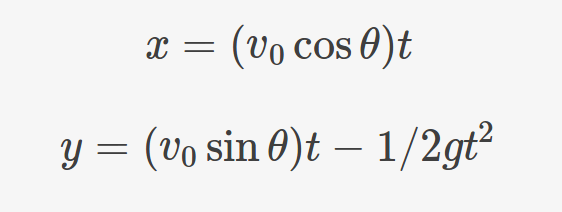
  const PhysicsElement = () => {
    //MKS system of units
    const V0 = 90.0; // m/s
    const DEG = 45; //degree
    const THETA = DEG / 180 * Math.PI; //radian
    const G = 9.8; //gravity const
    //t seconds elapsed 10msec time resolution
    const t = __
      .intervalSeq(Immutable.Range(), 10)
      .__((count) => (count * 10 / 1000));
    const x = __([t]).__(([t]) => V0 * Math.cos(THETA) * t);
    const y = __([t]).__(([t]) => V0 * Math.sin(THETA) * t - 1 / 2 * G * Math.pow(t, 2));
    //==================================
    const Drawscale = 1; //1 dot = 1 meter
    const __seqEl = __([x, y]) //atomic update
      .__(([x, y]) => (
      <div>
        <svg height = "250"  width = "100%">
            <circle r="2" fill="red"
        cx = {50 + x * Drawscale} cy = {250 - y * Drawscale}/>
        </svg>
      </div>));
    return __Element(__seqEl);
  };
See the live DEMO @ http://timeengine.github.io