
Package Exports
- @datastructures-js/heap
This package does not declare an exports field, so the exports above have been automatically detected and optimized by JSPM instead. If any package subpath is missing, it is recommended to post an issue to the original package (@datastructures-js/heap) to support the "exports" field. If that is not possible, create a JSPM override to customize the exports field for this package.
Readme
@datastructures-js/heap




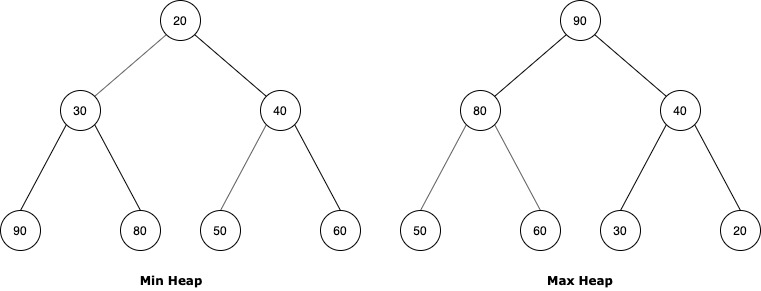
a complete javascript implementation for the Min/Max Heap data structures & Heap Sort algorithm.
install
npm install --save @datastructures-js/heapAPI
require
const { MinHeap, MaxHeap } = require('@datastructures-js/heap');import
import { MinHeap, MaxHeap } from '@datastructures-js/heap';create a heap
new
creates an empty heap.
const minHeap = new MinHeap();

const maxHeap = new MaxHeap();
.heapify(list)
converts an array of objects to a heap.
the function can read a list elements that are number, string, or a serialized heap node like { key: 10, value: { someProp: 'someVal' } }.
const list = [
  50,
  80,
  { key: 30, value: 'something' },
  90,
  { key: 60, value: null },
  40,
  { key: 20, value: { name: 'test' } }
];

const minHeap = MinHeap.heapify(list);

const maxHeap = MaxHeap.heapify(list);
.insert(key, value)
insert a node into the heap.
key can be a number or a string
value can be any object type.
a heap node is created as an instance of NodeHeap.
const minHeap = new MinHeap();

const maxHeap = new MaxHeap();

minHeap.insert(50);
minHeap.insert(80);
minHeap.insert(30, 'something');
minHeap.insert(90);
minHeap.insert(60, null);
minHeap.insert(40);
minHeap.insert(20, { name: 'test' });

maxHeap.insert(50);
maxHeap.insert(80);
maxHeap.insert(30, 'something');
maxHeap.insert(90);
maxHeap.insert(60, null);
maxHeap.insert(40);
maxHeap.insert(20, { name: 'test' });
HeapNode
returned with .root() & .extractRoot() functions. It implements the following interface
.getKey()
returns the node's key (number or string) that is used to compare with other nodes.
.getValue()
returns the value that is associated with the key.
.serialize()
returns an object literal of key/value of the node.
.root()
returns (peeks) the root node without removing it.
const min = minHeap.root();
console.log(min.getKey()); // 20
console.log(min.getValue()); // { name: 'test' }
console.log(min.serialize()); // { key: 20, value: { name: 'test' } }

const max = maxHeap.root();
console.log(max.getKey()); // 90
console.log(max.getValue()); // undefined
console.log(max.serialize()); // { key: 90, value: undefined }
.extractRoot()
returns and remove the root node in the heap.
const min = minHeap.extractRoot();
console.log(min.getKey()); // 20
console.log(min.getValue()); // { name: 'test' }
console.log(min.serialize()); // { key: 20, value: { name: 'test' } }
console.log(minHeap.root().getKey()); // 30

const max = maxHeap.extractRoot();
console.log(max.getKey()); // 90
console.log(max.getValue()); // undefined
console.log(max.serialize()); // { key: 20, value: undefined }
console.log(maxHeap.root().getKey()); // 80
.size()
returns the number of nodes in the heap.
console.log(minHeap.size()); // 6
console.log(maxHeap.size()); // 6
.clone()
creates a shallow copy of a heap by slicing the nodes array and passing it to a new heap instance.
const minHeapClone = minHeap.clone();
minHeapClone.extractRoot();

console.log(minHeapClone.root().getKey()); // 40
console.log(minHeap.root().getKey()); // 30
.sort()
implements Heap Sort and sorts a Max Heap in ascneding order or a Min Heap in descending order.
calling .sort() directly on a heap will mutate its nodes location. To avoid that, you can sort a shallow copy of the heap.
const sortedAsc = maxHeap.clone().sort(); // does not mutate the heap structure
const sortedDesc = minHeap.clone().sort(); // does not mutate the heap structure
If you are using this npm for the purpose of sorting a list of elements using Heap Sort, you can do it like this
const sortedAsc = MaxHeap.heapify(unsortedList).sort();
const sortedDesc = MinHeap.heapify(unsortedList).sort();
.clear()
clears the nodes in the heap
minHeap.clear();
maxHeap.clear();

console.log(minHeap.size()); // 0
console.log(minHeap.root()); // null

console.log(maxHeap.size()); // 0
console.log(maxHeap.root()); // null
Build
lint + tests
grunt buildLicense
The MIT License. Full License is here