
Package Exports
- react-native-animated-splash-screen
This package does not declare an exports field, so the exports above have been automatically detected and optimized by JSPM instead. If any package subpath is missing, it is recommended to post an issue to the original package (react-native-animated-splash-screen) to support the "exports" field. If that is not possible, create a JSPM override to customize the exports field for this package.
Readme







React Native Animated Splash Screen
Animated splash screen for Android and iOS. It is based on Implementing Twitter’s App Loading Animation in React Native topic from RN. To work on Android, it use an Image instead of MaskedView.
Example
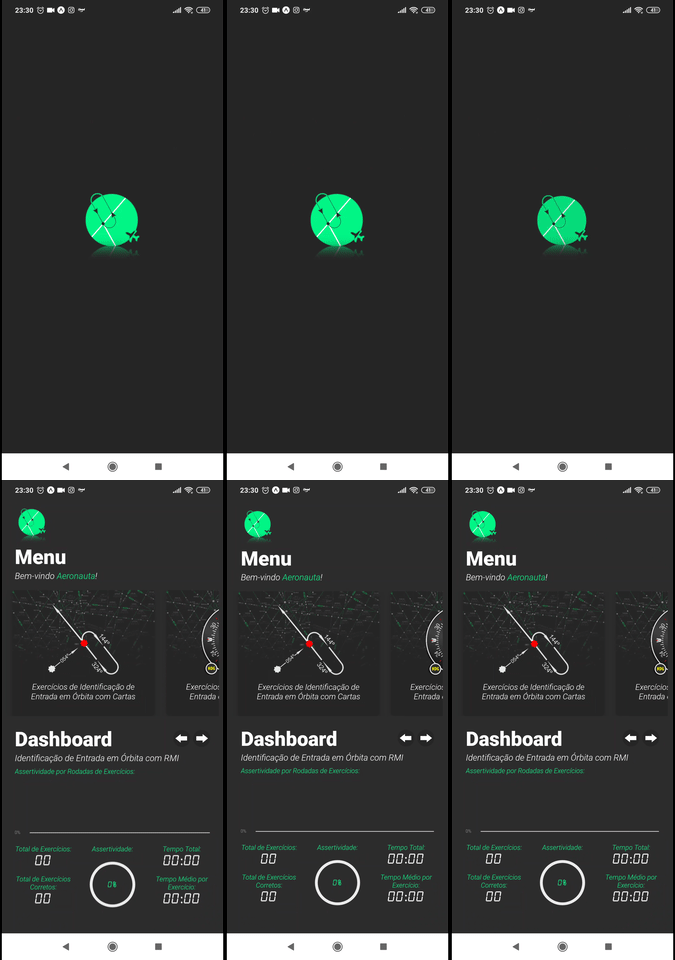
Features
- Custom background color
- Custom logo
- Custom logo size
Installation
yarn add react-native-animated-splash-screen
or
npm install --save react-native-animated-splash-screen
Usage
import AnimatedSplash from "react-native-animated-splash-screen";

render() {
    return (
      <AnimatedSplash
        isLoaded={this.state.isLoaded}
        logoImage={require("./assets/logo.png")}
        backgroundColor={"#262626"}
        logoHeight={150}
        logoWidht={150}
      >
        <App />
      </AnimatedSplash>
    );
  }
Props
| Name | Description | Type | Required | Default Value |
|---|---|---|---|---|
| isLoaded | Condition to show children component and finish the animation. | Boolean | ✓ | |
| backgroundColor | Splash screen background color. | String | '#f00' |
|
| logoImage | Splash screen logo image. | Object | ✓ | |
| logoWidth | Logo image width in px. |
Number | 150 | |
| logoHeight | Logo image height in px. |
Number | 150 | |
| children | Children to render inside this component. | Node | null |
|
| preload | Condition to load children component while wait isLoaded prop be True. | Boolean | true |
Example with React Navigation
1) Create a navigator (Stack or Switch) normally:
const AppNavigator = createStackNavigator(
  {
    home: {
      screen: HomeScreen,
      navigationOptions: {
        header: null
      }
    },
    dashboard: {
      screen: DashboardScreen,
      navigationOptions: {
        title: "Dashboard"
      }
    }
  },
  {
    initialRouteName: "home"
  }
);
2) Create an app container:
const Container = createAppContainer(AppNavigator);3) Pass the container as a children of AnimatedSplash:
class App extends React.Component {
  state = {
    isLoaded: false
  };

  async componentDidMount() {
    await loadAsync();
    this.setState({ isLoaded: true });
  }

  render() {
    return (
      <AnimatedSplash
        isLoaded={this.state.isLoaded}
        logoImage={require("./assets/logo.png")}
        backgroundColor={"#262626"}
        logoHeight={150}
        logoWidht={150}
      >
        <Container />
      </AnimatedSplash>
    );
  }
}

export default App;
Example with React Navigation (setting isLoaded inside a screen of navigator)
Make sure you have done the previous step.
1) Pass the IsLoaded function as screenProps of Container:
class App extends React.Component {
  state = {
    isLoaded: false
  };

  setAppLoaded = () => {
    this.setState({ isLoaded: true });
  };

  render() {
    return (
      <AnimatedSplash
        isLoaded={this.state.isLoaded}
        logoImage={require("./assets/logo.png")}
        backgroundColor={"#262626"}
        logoHeight={150}
        logoWidht={150}
      >
        <Container screenProps={{ setAppLoaded: this.setAppLoaded }} />
      </AnimatedSplash>
    );
  }
}

export default App;
2) Update your navigator to handle screenProps on the chosen screen:
const AppNavigator = createSwitchNavigator(
  {
    home: {
      screen: props => (
        <HomeScreen {...props} setAppLoaded={props.screenProps.setAppLoaded} />
      )
    },
    dashboard: { screen: DashboardScreen }
  },
  {
    initialRouteName: "home"
  }
);
2) Call the function on the chosen screen:
this.props.setAppLoaded();Author
License
MIT