

Package Exports
- true-myth
This package does not declare an exports field, so the exports above have been automatically detected and optimized by JSPM instead. If any package subpath is missing, it is recommended to post an issue to the original package (true-myth) to support the "exports" field. If that is not possible, create a JSPM override to customize the exports field for this package.
Readme
True Myth


A library for safe functional programming in JavaScript, with first-class
support for TypeScript and Flow, that has Maybe and Result types, supporting both a
functional style and a more traditional method-call style.
- Just the API, please
- What is this for?
- Design philosophy
- Setup
- Roadmap
- Why not...
- Migrating from existing libs
- What's with the name?
Just the API, please
If you're unsure of why you would want to use the library, you might jump down to What is this for?.
These examples don't cover every corner of the API; it's just here to show you what a few of the functions are like. Full API documentation is available!
Result with a functional style
function fallibleCheck(isValid: boolean): Result<string, { reason: string }> {
  return isValid ? ok('all fine here') : err({ reason: 'was not valid' });
}

const describe = s => 'The outcome was: ' + s;

const wentFine = fallibleCheck(true);
const mappedFine = map(describe, wentFine);
console.log(toString(mappedFine)); // "Ok(The outcome was: all fine here)"

const notGreat = fallibleCheck(false);
const mappedBad = map(describe, notGreat);
console.log(toString(mappedBad)); // "Err({ reason: 'was not valid' })"
Maybe with the method style
function safeLength(mightBeAString: Maybe<string>): Maybe<number> {
  return mightBeAString.map(s => s.length);
}

const someString = Maybe.just('a string');
const nothingHere = Maybe.nothing<string>();
console.log(safeLength(someString).toString()); // "Just(8)"
console.log(safeLength(nothingHere).toString()); // "Nothing"
Constructing Maybe
You can use Maybe.of to construct a Maybe from any value. It will return a
Nothing if the passed type is null or undefined, or a Just otherwise.
function acceptsANullOhNo(value: number | null): Maybe<string> {
  const maybeNumber = Maybe.of(value);
  return mapOr("0", n => n.toString(), maybeNumber);
}
Safely getting at values
Helpers are supplied to allow you to get at the values wrapped in the type:
const theAnswer = Result.ok(42);
const theAnwerValue = unsafelyUnwrap(theAnswer);
However, as its name makes explicit unsafelyUnwrap is not a safe operation; if
the item being unwrapped is an Err, this will throw an Error. Instead, you
can use one of the safe unwrap methods:
const theAnswerValue = unwrapOr(0, theAnswer);What is this for?
The History
How do you represent the concept of not having anything, programmatically? As a
language, JavaScript uses null to represent this concept; if you have a
variable myNumber to store numbers, you might assign the value null when you
don't have any number at all. If you have a variable myString, you might set
myString = null; when you don't have a string.
Some JavaScript programmers use undefined in place of null or in addition to
null, so rather than setting a value to null they might just set let myString; or even let myString = undefined;.
The problem
Every language needs a way to express the concept of nothing, but null and
undefined are a curse. Their presence in JavaScript (and in many other
languages) introduce a host of problems, because they are not a particularly
safe way to represent the concept. Say, for a moment, that you have a function
that takes an integer as a parameter:
let myNumber = undefined;

function myFuncThatTakesAnInteger(anInteger) {
  return anInteger.toString();
}

myFuncThatTakesAnInteger(myNumber); // TypeError: anInteger is undefined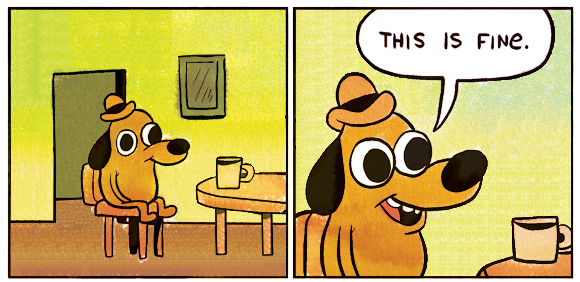
When the function tries to convert the integer to a string, the function blows
up because it was written with the assumption that the parameter being passed in
(a) is defined and (b) has a toString method. Neither of these assumptions are
true when anInteger is null or undefined. This leads JavaScript
programmers to program defensively, with if (!anInteger) return; style guard
blocks at the top of their functions. This leads to harder-to-read code, and
what's more, it doesn't actually solve the root problem. You could imagine
this situation playing itself out in a million different ways: arguments to
functions go missing. Values on objects turn out not to exist. Arrays are absent
instead of merely empty.
The result is a steady stream not merely of programming frustrations, but of errors. The program does not function as the programmer intends. That means stuff doesn't work correctly for the user of the software. Imagine a hammer where the head just slips off every so often, in ways you could compensate for but which makes it that much harder to just get the nail into the wood.
That's what null and undefined are. You can program around them. But
defensive programming is gross. You write a lot of things like this:
function isNil(thingToCheck) {
  return thingToCheck === undefined || thingToCheck === null;
}

function doAThing(withAString) {
  if (isNil(withAString)) {
    withAString = 'some default value';
  }

  console.log(withAString.length);
}
If you forget that check, or simply assume, "Look, I'll never call this
without including the argument," eventually you or someone else will get it
wrong. Usually somewhere far away from the actual invocation of doAThing, so
that it's not obvious why that value ended up being null there.
TypeScript and Flow take us a big step in that direction, so long as our type
annotations are good enough. (Use of any will leave us sad, though.) We can
specify that type may be present, using the maybe/optional annotation.
This at least helps keep us honest. But we still end up writing a ton of
repeated boilerplate to deal with this problem. Rather than just handling it
once and being done with it, we play a never-ending game of whack-a-mole. We
must be constantly vigilant and proactive so that our users don't get into
broken error states. Are you tired of the game yet?
The solution
Maybe and Result are our escape hatch from all this madness.
We reach for libraries precisely so we can solve real business problems
while letting lower-level concerns live in the "solved problems" category. True
Myth, borrowing ideas from many other languages and libraries, aims to put
code written to defend against null/undefined problems in that "solved
problems" category.
Maybe and Result solve this problem once, and in a principled way,
instead of in an ad-hoc way throughout your codebase, by putting the value
into a container which is guaranteed to be safe to act upon, regardless of
whether there's something inside it or not.
These containers let us write functions with actually safe assumptions about parameter values by extracting the question, "Does this variable contain a valid value?" to API boundaries, rather than needing to ask that question at the head of every. single. function.
What is this sorcery?
It turns out you probably already have a good idea of how this works, if you've spent much time writing JavaScript, because this is exactly how arrays work.
Imagine, for a moment, that you have a variable myArray and you want to map
over it and print out every value to the console. You instantiate it as an empty
array and then forget to load it up with values before mapping over it:
let myArray = [];

// oops, I meant to load up the variable with an array, but I forgot!

myArray.forEach(n => console.log(n)); // <nothing prints to the screen>
Even though this doesn't print anything to the screen, it doesn't unexpectedly blow up, either. In other words, it represents the concept of having nothing "inside the box" in a safe manner. By contrast, an integer has no such safe box around it. What if you could multiply an integer by two, and if your variable was "empty" for one reason or another, it wouldn't blow up?
let myInteger = undefined;

myInteger * 3; // :(
Let's try that again, but this time let's put the actual value in a container and give ourselves safe access methods:
let myInteger = Maybe.of(undefined);

myInteger.map(x => x * 3); // Nothing
We received Nothing back as our value, which isn't particularly useful, but it
also didn't halt our program in its tracks!
Result is similar to Maybe, except it packages up the result of an operation
(like a network request) whether it's a success (an Ok) or a failure (an
Err) and lets us unwrap the package at our leisure. Whether you get back a 200
or a 401 for your HTTP request, you can pass the box around the same either way;
the methods and properties the container has are not dependent upon whether
there is shiny new data or a big red error inside.
- TODO: comments on type safety via TS and Flow
Design philosophy
The design aims for True Myth are:
- to be as idiomatic as possible in JavaScript
- to support a natural functional programming style
- to have zero runtime cost beyond simple object construction and function invocation
- to lean heavily on TypeScript and Flow to enable all of the above
In practice, that means:
You can construct the variant types in the traditional JavaScript way or with a pure function:
const classicalJust = new Just('value');
const functionalJust = just('value');
const classicalNothing = new Nothing();
const functionalNothing = nothing();
Similarly, you can use methods or pure functions:
const numberResult = ok(42);
const ok84 = numberResult.map(x => x * 2);
const ok21 = map(x => x / 2, numberResult);
As this second example suggests, the aim has been to support the most idiomatic approach for each style. This means that yes, you might find it a bit confusing if you're actively switching between the two of them. (Why would you do that?!?)
Using the library with TypeScript or Flow will just work and will provide you with considerable safety out of the box. Using it with JavaScript will work just fine, but there is no runtime checking, and you're responsible to make sure you don't
unwrap()aMaybewithout checking that it's safe to do so.Since this is a TypeScript- and Flow-first library, we intentionally leave out any runtime type checking. As such, you should make use of the type systems if you want the benefits of the system. Many of the functions simply assume that the types are checked, and will error if you pass in items of the wrong type.
For example, if you pass a non-
Maybeinstance to many functions, they will simply fail – even the basic helpers likeisJustandisNothing. These assumptions have been made precisely because this is a TypeScript- and Flow-first library. (See the discussion below comparing True Myth to Folktale and Sanctuary if you aren't using TypeScript or Flow and need runtime checking.)
The overarching themes are flexibility and approachability.
The hope is that a team just picking up these ideas for the first time can use them without adapting their whole style to a "traditional" functional programming approach, but a team comfortable with functional idioms will find themselves at home with the style of data-last pure functions. (For a brief discussion of why you want the data last in a functional style, see this blog post.)
(As a closely related note: True Myth does not currently supply curried variants of the functions. There are a lot of good options out there for that; both lodash and Ramda have tools for currying existing function definitions. It also profoundly complicates writing the type signatures for these functions, since neither TypeScript nor Flow can easily represent auto- curried functions – unsurprisingly, given they're uncommon in JavaScript. Using Ramda or lodash to get curried versions of the functions may be a huge win for you in your codebase, though!)
The type names
Maybe
The existing options in this space include Option, Optional, and Maybe.
You could also point to "nullable," but that actually means the opposite of
what we're doing here – these represent types which can not be nullable!
Option implies a choice between several different options; in this case
that's not really what's going on. It's also not really a great word for the
type in the sense that it's weird to read aloud: "an Option string" doesn't make
any sense in English.
Optional is much better than Option. The semantics are much more accurate,
in that it captures that the thing is allowed to be absent. It's also the nicest
grammatically: "an Optional string". On the other hand, it's also the longest.
Maybe seems to be the best type name semantically: we're modeling something
which may be there – or may not be there! Grammatically, it's comparable to
"optional": "a Maybe string" isn't great – but "maybe a string" is the most
natural accurate way to answer the question, "What's in this field?" It's also
the shortest!
Optional or Maybe are both good names; Maybe just seemed slightly better.
The Maybe variants: Just and Nothing
Similar consideration was given to the names of the type variants. Options for
the "present" type in other libraries are Some and Just. Options for the
"absent" type are None or Nothing.
- TODO: elaborate on reasons for
JustandNothing
Result
- TODO: Explain why
Result
The Result variants: Ok and Err
- TODO: explain why
OkandErr(esp. instead ofError)
Setup
JavaScript
- TODO: JS setup
TypeScript
- TODO: TS setup
Flow
- TODO: Flow setup
Roadmap
Before this hits 1.0, I will do:
Maybe- add aliases for the standard names, e.g.
bind,chain, etc. - finish documentation
- add aliases for the standard names, e.g.
Result- implement
- document
Either- implement
- document
If you think another type should be in this list, please open an issue!
Why not...
There are other great functional programming libraries out there... so why not just use one of them?
Folktale?
Folktale has an API a lot like this one, as you'll see when perusing the docs. However, there are two main reasons you might prefer True Myth to Folktale:
True Myth is TypeScript-first and Flow-first, which means that it assumes you are using TypeScript or Flow if you're aiming for rigorous type safety.
By contrast, Folktale is a JavaScript-first library, with runtime checking built in for its types. Folktale's TypeScript support is in-progress, but will remain secondary until a TypeScript rewrite of the whole Folktale library lands... eventually.
There's value in both of these approaches, so True Myth aims to take advantage of the compilers and play in a no-runtime-cost space.
If you want a JS-focused (rather than TS- or Flow-focused) library which will help you be safer without a compiler, you should definitely pick Folktale over True Myth. If you've already using TS or Flow, True Myth is a bit nicer of an experience.
True Myth aims to keep functional programming jargon to a minimum and to use TypeScript and Flow type notation throughout its docs as well as in its implementation.
Folktale is aimed squarely at people who are already pretty comfortable with the world of strongly-typed functional programming languagues. This is particularly evident in the way its type signatures are written out (using the same basic notation you might see in e.g. Haskell), but it's also there in its heavy use of functional programming terminology throughout its docs.
Haskell-style types are quite nice, and functional programming jargon is very useful. However, they're also another hump to get over. Again: a tradeoff.
By opting for type notation that TS or Flow developers are already familiar with, and by focusing on what various functions do rather than the usual FP names for them, True Myth aims at people just coming up to speed on these ideas.
The big win for Folktale over True Myth is Fantasy Land compatibility.
True Myth's API aims to be more idiomatic as JavaScript/TypeScript, with a couple differences in particular worth calling out:
function naming convention: True Myth uses PascalCase for types and camelCase for functions – so,
new Just(5)andjust(5), whereas FolkTale uses the capitals as function names for type constructors, i.e.Just(5), and does not supportnew.ease of construction from nullable types: True Myth allows you to construct
Maybetypes from nullable types withMaybe.of, because JS is full ofnullandundefined, and allowingMaybe.ofto handle them makes it easier to be sure you're always doing the right thing.Folktale's
Maybe.ofonly allows the use of non-nullable types, and requires you to useMaybe.fromNullableinstead. This isn't unreasonable, but it dramatically decreases the convenience of integration with existing JS codebases or interfacing with untyped JS libraries.
Sanctuary?
- TODO: kind of the same as Folktale, but add specific details
Migrating from other libraries
- TODO: instructions for migrating from Folktale 1.0/2.0
- TODO: instructions for migrating from Sanctuary
What's with the name?
- TODO: Tolkien/Lewis, also Folktale/FantasyLand/Sanctuary. Nice resonance